

INSIDE ESTP
Where knowledge becomes practice.
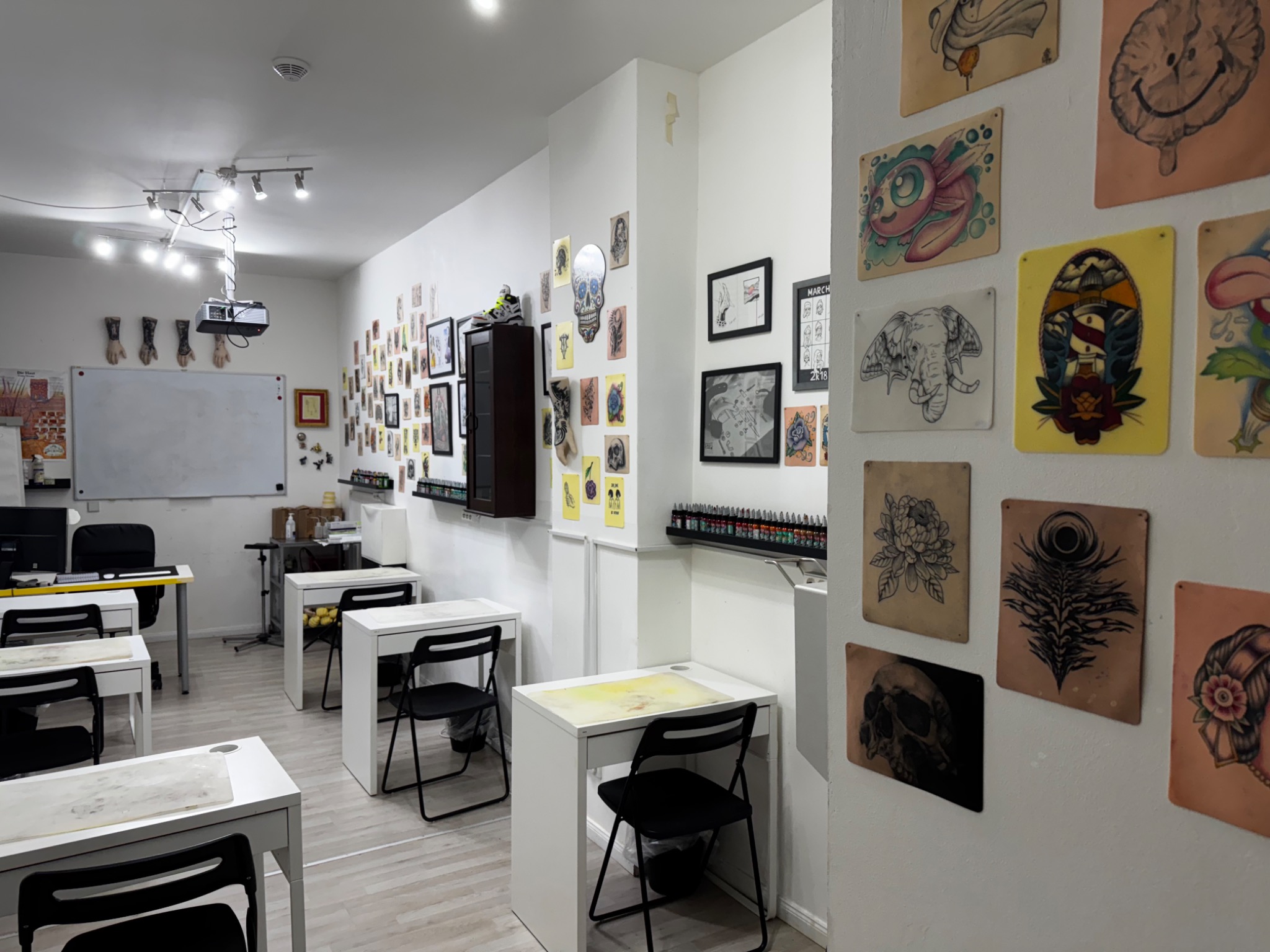
Explore how tattooing practice, work on artificial skin, drawing and art lessons, and hygiene connect throughout your training.
INSIDE ESTP
Four parts of one craft.
A tattoo begins before the machine touches the surface. Drawing develops your understanding of the design; practical lessons connect it to equipment and working methods; artificial skin gives you space to repeat, review and improve. Hygiene underpins the entire process, from preparation to responsible working practices and client care.
01 / TECHNIQUE & WORKING METHODS
Tattooing practice
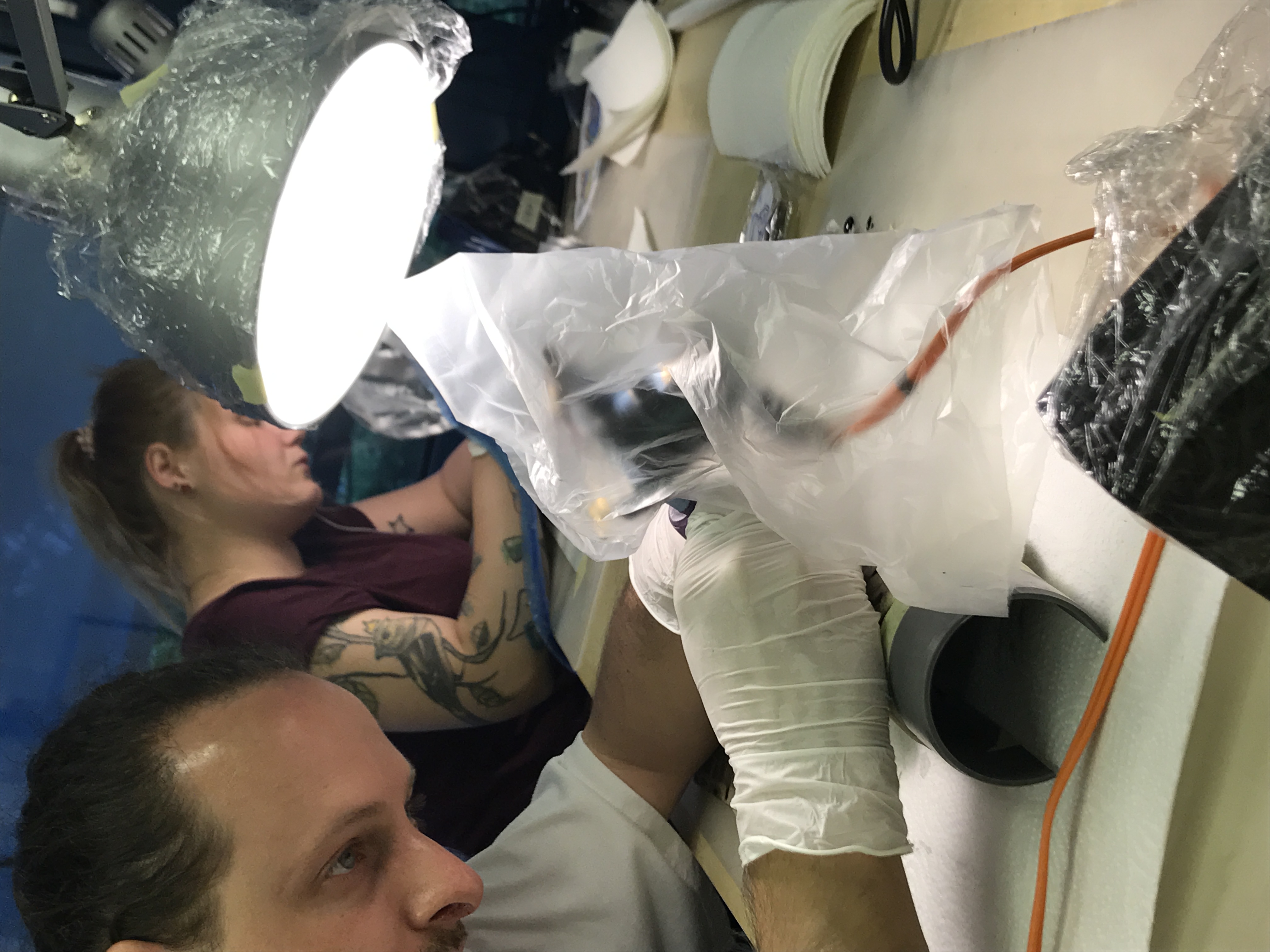
Practical lessons bring artistic decisions together with technical understanding. You learn how a design moves from drawing and stencil preparation into an organised tattooing workflow, with attention to hygiene, equipment and controlled application.
The focus is on understanding what you are doing and why. Instructors review your work and help you recognise where technique, preparation or the design itself needs further attention.
What the lessons cover
- Machine handling, needle configurations and the relationship between equipment and technique.
- Linework, shading and colour packing as distinct skills that need focused practice.
- Preparing designs and stencils, and organising the workstation with hygiene in mind.
- Reviewing consistency, clarity and the overall finish of your work.
From individual exercises to complete work
You connect separate skills into a considered working process, learning to plan a piece, assess the result and identify what to practise next.
02 / REPETITION & DEVELOPMENT
Work on artificial skin
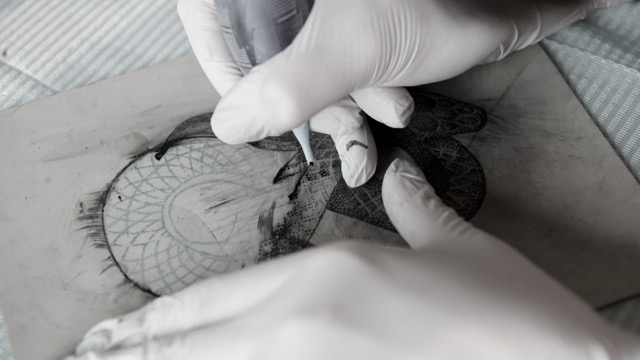
Artificial skin provides a dedicated surface for developing machine control and translating drawn designs into tattooing exercises. You can repeat a task, compare results and concentrate on particular aspects of your technique.
Practice develops from focused exercises into more complete designs. Independent work and regular feedback support your progress, including the development of a full-sleeve concept on an anatomical practice surface.
What you practise
- Repeating lines and shapes to develop control and consistency.
- Building smooth tonal transitions, different shading textures and solid areas.
- Following a design through stencil placement, application and review.
- Adapting a composition to an anatomical surface and keeping a larger piece coherent.
A training surface with a clear purpose
Artificial skin helps you rehearse and assess technique, but does not reproduce the response of living skin. The professional studio internship is a separate stage of the training.
03 / ART & TATTOO DESIGN
Drawing and art lessons
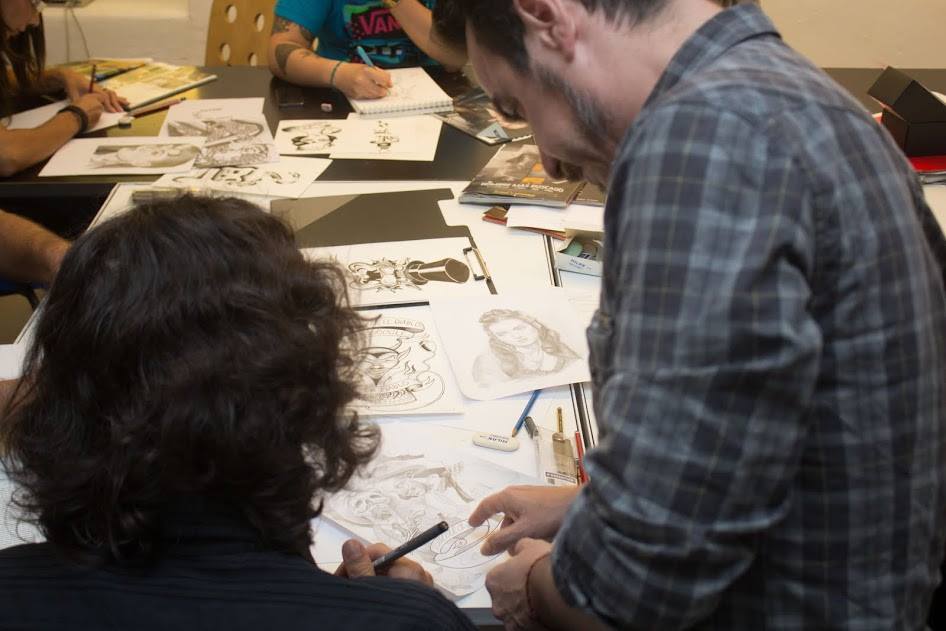
Drawing lessons develop the visual understanding behind tattooing: how lines describe a form, how light and shade create volume, and how colour and composition guide the eye. The aim is to make deliberate design choices and understand how they translate into a tattoo.
You study tattoo history and styles alongside practical drawing tasks. Attention to tradition, composition and placement helps you develop your own visual language while keeping the design readable and suited to the body.
What you develop
- Line quality, shape and the structure of a clear, readable design.
- Shading, texture, tonal values and the relationship between light and form.
- Colour theory, contrast and balance within a composition.
- Body adaptation, flow and negative space, from individual motifs to larger projects.
Draw, question and refine
Structured exercises and individual feedback help you evaluate your choices, develop stronger artwork and build a considered portfolio.
04 / HYGIENE & RESPONSIBILITY
Hygiene and professional responsibility
Tattooing involves breaking the skin. Hygiene is therefore a core part of the craft and a responsibility towards both the person being tattooed and the tattooist. It needs to inform your preparation, your working methods and the decisions you make throughout a session.
Lessons connect hygiene theory with studio practice. You study how contamination occurs, how risks are reduced and why different materials, surfaces and instruments require different handling. The aim is to understand the reasoning behind a hygienic workflow and apply it consistently.
What the lessons cover
- Routes of transmission, contamination and cross-contamination in a tattooing environment.
- Hand hygiene, gloves and personal protective equipment as parts of an organised working process.
- The different roles of cleaning, disinfection and sterilisation, alongside single-use materials.
- Workstation preparation, safe handling of sharps and waste, and the separation of clean and contaminated materials.
- Clear client communication, aftercare information and the documentation that supports professional practice.
A standard you must understand and demonstrate
Hygiene is taught and assessed as part of the Certified Tattoo Course. It is an ongoing working discipline, developed alongside your artistic and technical skills.
ESTP BERLIN
Practice. Review. Develop.
These subjects are taught as connected parts of tattooing. You draw, test ideas, practise technique and develop hygienic working habits, returning to your work with feedback — building understanding through both study and repetition.
YOUR START IN TATTOOING · 2027
Certified Tattoo Course
Next course: